Sciatica (Leg Pain from Nerve Compression)
Sciatica is a clinical symptom caused by irritation or compression of a spinal nerve root in the lower back, producing sharp, radiating pain, numbness, or weakness that travels down the leg.
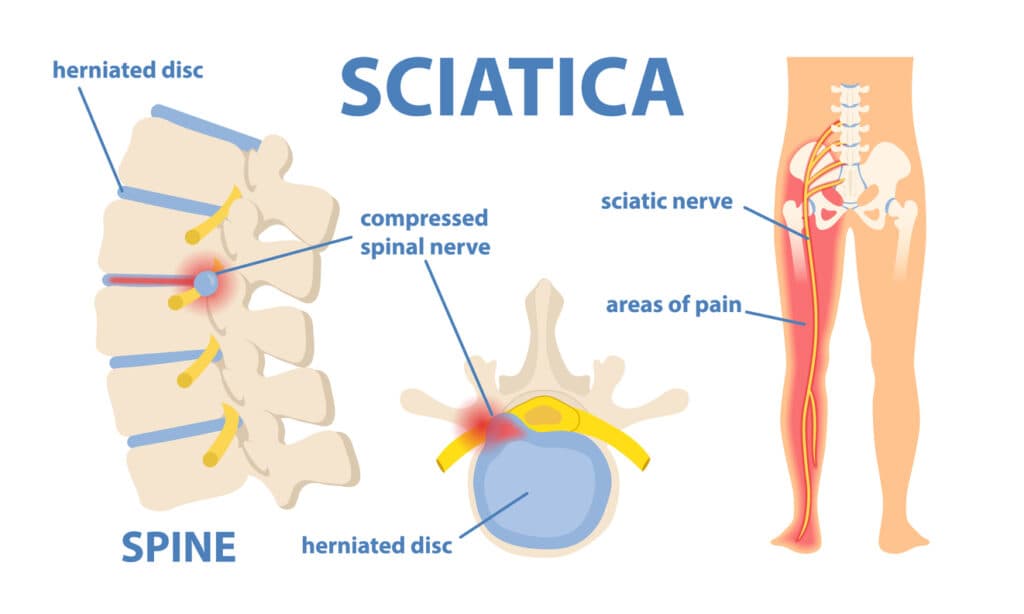
Sciatica is not a disease itself but a symptom caused by irritation or compression of a spinal nerve in the lower back. It produces pain that travels from the lower back into the buttock and down the leg, sometimes reaching the foot.
Many patients think it is simply “leg pain” or a muscle pull, but in most cases, the actual problem lies in the spine.
Typical Symptoms
Sciatica pain is different from ordinary back pain. It usually affects only one leg.
Common symptoms include:
- Pain radiating from back to buttock and leg
- Sharp, burning, or electric shock–like pain
- Tingling or pins-and-needles sensation
- Numbness in leg or foot
- Weakness in foot or ankle
- Difficulty standing or walking for long
- Pain worsens while sitting, coughing, or sneezing
Important sign:
Leg pain is often more severe than back pain in sciatica.
What Causes Sciatica?
Sciatica occurs when a nerve root in the lumbar spine is compressed. The most common causes are:
1. Slip Disc (Herniated Disc)
The most frequent cause. A bulging disc presses on the nerve.
2. Lumbar Canal Stenosis
Narrowing of the spinal canal, usually seen in older adults.
3. Spondylolisthesis
One vertebra slips forward over another and compresses the nerve.
4. Bone Spurs / Degeneration
Age-related wear and tear causing nerve irritation.
How It Is Diagnosed
Diagnosis includes:
- Clinical examination
- Nerve function testing during physical exam
- MRI scan (most important investigation)
An MRI helps identify the exact nerve being compressed and guides treatment.
Treatment Options
The majority of sciatica cases improve without surgery.
Non-Surgical Treatment
- Medications for nerve pain
- Activity modification
- Physiotherapy
- Posture correction
- Short period of rest (not prolonged bed rest)
Most patients improve within 3–6 weeks.
When Is Surgery Required?
Surgery is advised only when:
- Severe pain persists despite treatment
- Progressive weakness develops
- Walking becomes difficult
- Numbness increases
- Foot drop appears
- Bladder or bowel symptoms occur (emergency)
The aim of surgery is to remove nerve pressure, not simply treat back pain.
Modern minimally invasive surgery uses small incisions and most patients begin walking within 24–48 hours.
What Happens If You Ignore Sciatica?
Delaying treatment while the nerve remains compressed can lead to:
- Permanent numbness
- Chronic pain
- Muscle weakness
- Foot drop
- Irreversible nerve damage
Early consultation prevents long-term complications.
When to See a Spine Specialist
Consult if:
- Leg pain lasts more than 2–3 weeks
- Pain travels below the knee
- You feel numbness or weakness
- Pain is affecting sleep or walking
Have questions about this condition?
Consult Dr. Sajan Hegde, a pioneer in spine surgery and complex deformity correction.